

Across multi-location retail businesses, hundreds of productive hours disappear every single day.
These hours slip away, not through obvious failures or dramatic inefficiencies, but through small, barely-visible tasks that have become so routine nobody questions them.
The follow-up call to check whether a checklist was completed. The spreadsheet updated by hand for the third time this week. The shift handover that happens in a corridor conversation and is forgotten by morning.
These tasks don’t feel like wasted time – they’re just a normal part of work. And that’s precisely what makes them so costly.
Here are 10 of the most common hidden time drains in retail operations, and why eliminating them is about more than saving hours.
1. Manually chasing task completion
Across most retail sites you’ll find managers doing the same thing: calling, texting, or physically checking on whether routine tasks have been completed.
Was the temperature log filled in?
Did the morning opening checklist happen?
Has the promotional display been reset?
For single-site managers this is an inconvenience. For those overseeing multiple locations, it becomes a significant drain, pulling attention away from leadership, problem-solving or customer experience and redirecting it towards administrative chasing that should never have been necessary in the first place.
How to fix it:
With a connected platform like mpro5, you can eliminate hours wasted on manual follow-ups, as these are simply built into your automated workflows.
Managers can see at a glance which tasks have been completed and which areas are lagging behind, so they know where extra support is needed.
2. Data re-entry
A paper checklist is completed in-store. Someone then inputs it into a spreadsheet. That spreadsheet is summarised in a weekly email. The same piece of information has now been handled three times by three different people, with each transfer introducing the opportunity for error.
This duplication is rarely challenged because it gets labelled as reporting – but the hours spent on this kind of transcription work are almost always hours that could be better spent elsewhere.
How to fix it:
By integrating your critical systems with mpro5, you have complete control over your data and where it goes. Automate reporting so that managers and leadership teams get the reports they need, when they need them – no manual entry, no chasing.
3. System switching
Calling to make sure a promotion has been set up, an email to head office, sending WhatsApp messages to the warehouse staff – the consistent time lost to system switching is expensive and exhausting. Not to mention remembering where all those messages are when it comes to audit time.
How to fix it:
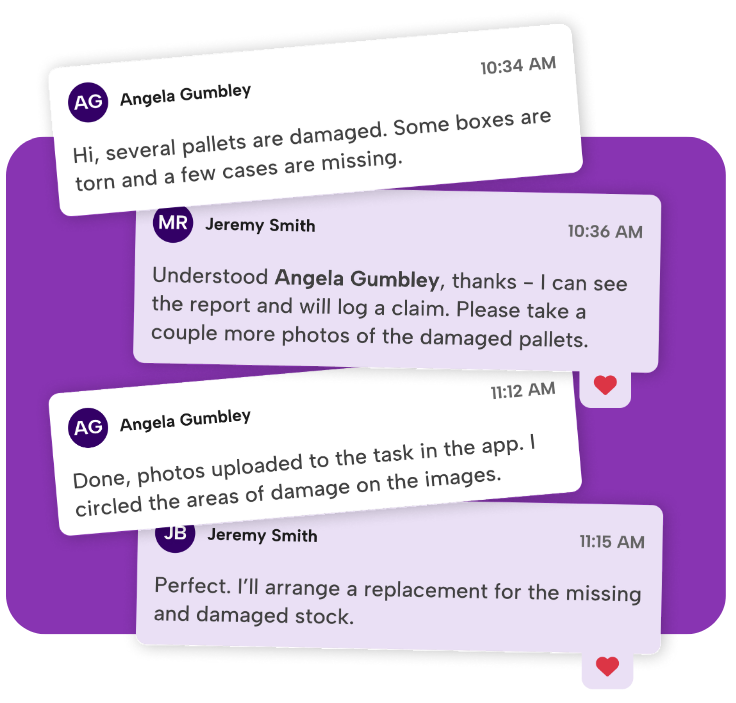
What if all your communication took place right where the work happens? That’s what Mpro5 gives you – the ability to make comments and start messaging threads attached to real jobs.
The communication module means terms can communicate with each other in an intuitive way, without the need for extra system switching. Plus, every communication is stored with the relevant job so you’re always audit-ready.
4. Process version chaos
Which cleaning checklist are we using this month? Has the safety procedure been updated since the last audit? Is this the current audit form, or an old one from a shared drive that nobody’s updated in two years?
When processes live in email threads, printed binders or badly-organised shared folders, teams waste time searching for the latest version (or they stop searching and start guessing…)
When managers interpret standards differently and sites have differing processes, consistency becomes a matter of luck rather than design.
How to fix it:
One centralized, digital system that houses all your procedures, training and documentation. With mpro5, whenever a process or policy changes, you can notify everyone who needs to know in just a few clicks. Teams can access everything on-the-move, through the app, so you know everyone’s on the same page.
5. Delayed escalation
Perhaps a team member notices a fridge running warm, or there’s a near-miss in the stockroom. Every day can bring hazards that need addressing.
These issues are often spotted early, when they’re still inexpensive and straightforward to resolve. But without a clear, easy way to log and escalate them, the report gets made verbally, written down or mentally filed away for later. By the time the issue gets the attention it needs – it’s urgent, expensive, and already affecting customers or safety.
What should have been a five-minute fix has become a multi-day incident. The delay isn’t caused by carelessness, but by inefficient and manual processes.
How to fix it:
With an always-on, mobile-first system like mpro5, the staff member who first noticed the breach can report it and escalate it instantly, triggering an automated set of follow-up actions until the matter is resolved.
Better yet – sensors can automatically feed data into mpro5, so head office can see as soon as there’s an issue – so that even when things don’t run exactly to plan, the fix is fast and efficient.
6. Inconsistent promotions
As well as the very real impact on revenue, inconsistent promotions cost your teams time. Up to 60% of in-store promotions are set up incorrectly – that’s all work that needs to be re-done, often after a considerable amount of chasing from managers.
Standards can be interpreted differently from one store to the next, compounding the effect of both time and revenue loss.
How to fix it:
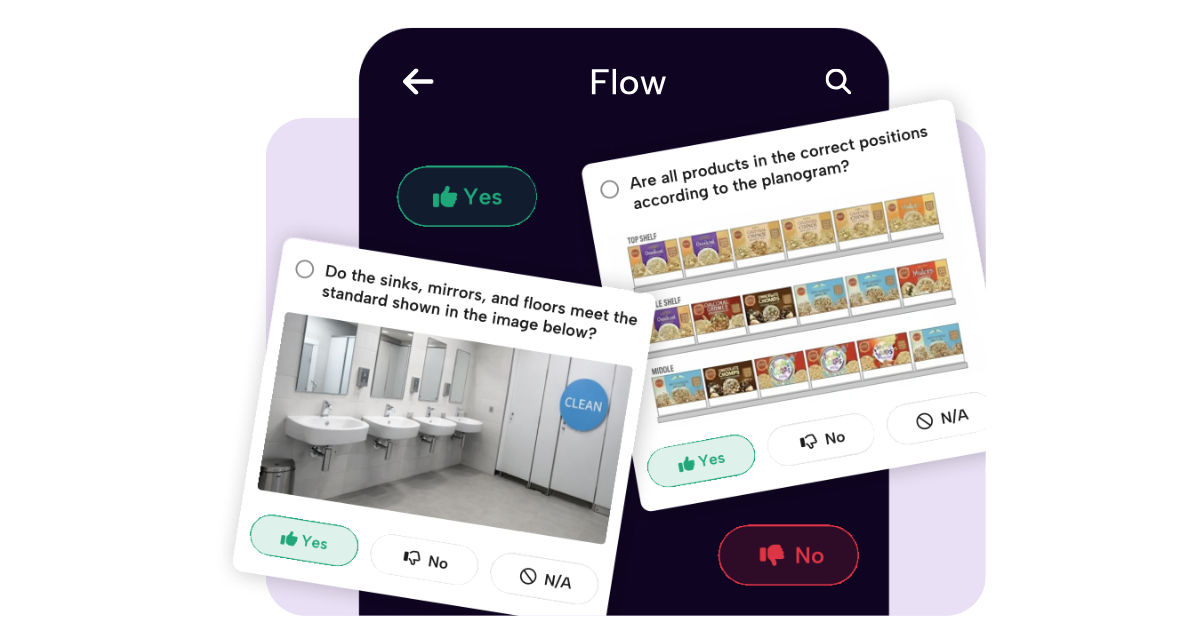
With mpro5, you can show your teams what good looks like by including visual standards. Upload plans or photographs of promotional activity and your teams can add the photo evidence of the promotion in store, directly into the app.
You’ll see progress in real-time cutting down on re-work and time spent following up.
7. Last minute changes that turn into lost hours
Retail is one of the most changeable environments there is, and operations need to move at the speed of conditions on the ground that day. Every unexpected absence, late delivery or last-minute change triggers a chain of messages, reassignments and follow-ups that quietly eat into your day.
Managers spend time absorbing this disruption, and for those managing multiple sites any disruption can create a reporting and compliance nightmare. All of this creates additional work for site managers and head office.
How to fix it:
Mpro5 gives your team a scheduling system that moves as fast as retail does, across all your sites.
Automatically move and shift schedules and tasks around local day-to-day challenges, meaning anything from staff sickness to unexpected closures won’t derail your day or break your reports.
8. Manual follow-up after audits and inspections
An audit or site visit generates a list of actions, and that’s when the real administrative work begins. Managers manually track who owns each action, send individual reminders and chase for updates (often repeatedly), without a defined end date.
The necessary changes to processes can fall through the cracks because ownership and accountability aren’t built into the process. Without a system that tracks follow-through automatically, it falls to a person to manage, and your teams are already busy with day-to-day delivery.
How to fix it:
Automated follow-up tasks mean that remedial actions or process changes don’t slip down the priority list.
With mpro5, follow-up tasks will show up on daily priority lists until they are done, with head office having full visibility of every task still outstanding, meaning every action after every audit can be followed up and processes actually get improved.
9. Getting training right at scale
Retail experiences one of the highest levels of staff turnover – up to 60% in the UK and US. If strong customer service is something you’re known for, getting training right first time is crucial to maintaining your reputation, as well as delivering the best experience across multiple sites.
New starters or seasonal workers learn by watching whoever happens to be on shift that day. The quality of their onboarding, and therefore their long-term performance, depends almost entirely on who they’re paired with and what kind of day that person is having.
The result is inconsistent standards from the very beginning, repeated mistakes that managers must correct, and a hidden cost on experienced staff who are pulled into informal coaching rather than doing their own jobs.
How to fix it:
By providing standardized training within mpro5, where all the work happens, new starters can get up to speed quickly and efficiently.
Whether you’re training up new colleagues, or rolling out additional training, mpro5’s learning module means managers know that all staff have received the same information in a way that’s easy to access and understand. Plus, you can see liuve completion rates across all sites, so you know who needs additional support.
10. No visibility at Head Office
Without real-time visibility across sites, head office is forced to rely on lagging indicators: end-of-week reports, missed audit deadlines or customer complaints. By the time reports make their way up the chain, the problems have already happened and the opportunity to prevent it, contain it or respond quickly is gone.
The most effective retail operations can respond in real time to what is happening on the ground, across all their locations.
How to fix it:
With real-time dashboards and automated reports, you can design mpro5 to give you all the information you need, across all sites so you’re never in the dark. See potential issues before they escalate, and react quickly – protecting your brand and revenue.
Once you can start to compare performance and spot trends across your locations, it frees up your time to offer extra support where it’s needed most – driven by data.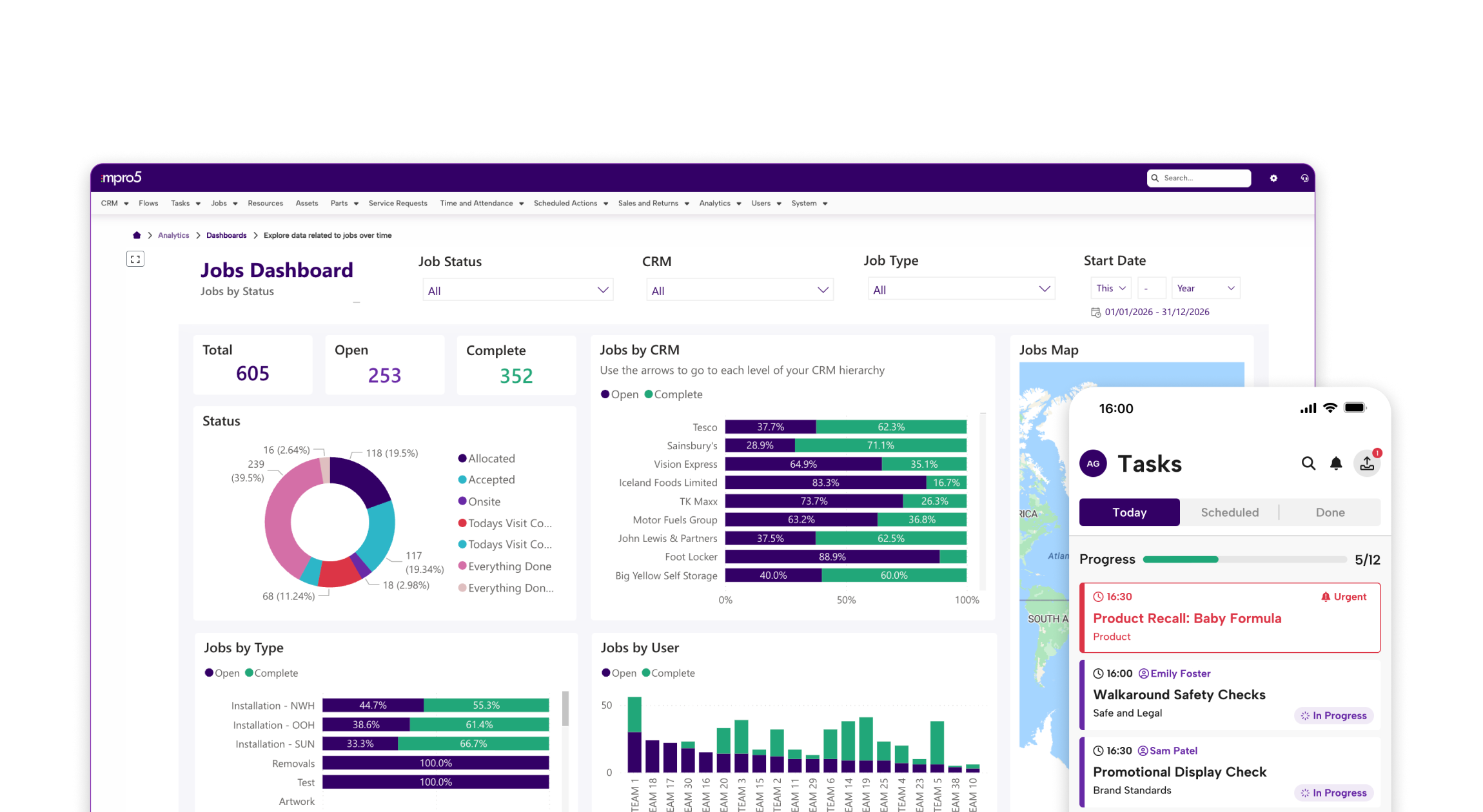
The compounding effect of lost time
Ten minutes lost here, fifteen minutes there. Multiply that by ten tasks, across fifty or a hundred sites, every single day of the year.
The result is a significant number of wasted hours – but it runs deeper than that. It lowers the collective morale of your teams and leads to inconsistent standards that erode brand and customer trust.
Major incidents and downtime are preventable, but it’s often the small, almost invisible tasks where your teams waste the most time – an inevitable consequence of running a complex, multi-site operation on a foundation of paper, spreadsheets and fragmented point tools that were never designed to scale efficiently.
How mpro5 helps retail teams thrive
A connected platform eliminates the friction points that most retail teams feel. By consolidating tasks, checks, audits, and reporting into one central platform, managers and HQ can make better, more data-driven decisions.
Work feels better for your frontline teams, too. With a mobile-first app that is completely intuitive and works offline – there’s no extra training or burden of yet another system.
Mpro5 has been a game changer for some of the UK’s largest retailers across thousands of locations. To see how we could help your retail operations, just book a demo with our expert team.
TL;DR: Environmental reporting in 2026
Environmental reporting is no longer annual; from 2026 it is expected to be continuous, auditable and operational.
Businesses in the UK, EU and US face increasing scrutiny over how environmental data is collected and verified, not just what is reported.
In Europe, CSRD reporting requirements expanded through 2025 and continue in 2026, affecting both EU companies and UK organisations with EU operations.
In the US, climate disclosure expectations led by the U.S. Securities and Exchange Commission continue to raise the bar for environmental data quality.
Manual processes such as spreadsheets and paper checks struggle to meet modern reporting and audit demands.
Automated environmental reporting provides real-time visibility, consistent data across sites and clear audit trails.
Organisations that invest early reduce compliance risk, improve operational performance and strengthen trust with regulators, customers and investors.
Environmental reporting has changed. What used to be a yearly paperwork exercise is now becoming part of everyday operations. In 2025 and 2026, businesses in the UK, Europe and the United States are under growing pressure to clearly show how they track and manage their environmental impact.
For many organisations, especially those with multiple sites, this is exposing a problem: their systems were never designed for this level of scrutiny. Spreadsheets, paper checks and manual data collection can no longer keep up. This is why automated environmental reporting is quickly becoming essential.
What’s changing and how does it affect businesses?
In Europe, the Corporate Sustainability Reporting Directive (CSRD) is moving from planning to reality. Although it came into force in 2024, 2025 was the first year many companies must submit reports that meet its requirements, with even more businesses affected in 2026.
While the UK is no longer part of the EU, UK companies are far from unaffected. Any organisation with operations, subsidiaries or listings in the EU must comply. At the same time, UK regulators are tightening expectations around environmental and climate disclosures, making reliable data more important than ever.
In the United States, the situation looks different but essentially leads to the same outcome. The U.S. Securities and Exchange Commission has introduced climate-related disclosure rules for public companies, and while these continue to evolve, investor and customer pressure is already high. US businesses operating internationally are also finding that EU-style reporting standards are becoming the baseline.
Across all regions, organisations must be able to explain not just what they report, but how they collect their data.
The real challenge behind compliance
The biggest obstacle to environmental compliance is often not a lack of intention, but outdated ways of working. Many businesses still depend on manual meter readings, site-by-site spreadsheets and paper-based checks. These methods are slow, inconsistent and difficult to verify.
As reporting standards become stricter, this creates risk. Data errors are harder to spot, audits take longer and teams spend more time chasing information than acting on it. What regulators and stakeholders expect is that confidence that environmental data is accurate, up to date and supported by a clear audit trail.
Why automation makes the difference
Automated environmental reporting changes how data is collected and used. Instead of relying on people to manually gather information, automated systems capture data directly from sites and equipment and make it visible in real time.
This allows businesses to see patterns, spot problems early and produce reports without last-minute pressure – essentially, the data becomes more valuable – not just an additional admin burden or checkbox exercise. More importantly, it creates consistency across locations, which is essential for large or multi-site organisations.
Rather than treating sustainability reporting as a separate task, automation builds it into daily operations so it becomes a natural part of how the business operates. When organisations have access to reliable, real-time environmental data they can start making smarter decisions.
They can quickly identify where energy or water use is higher than expected, address issues before they become expensive and improve conditions for employees and customers. Over time, this leads to lower waste, reduced costs and safer, more efficient operations.
Why reputation now depends on proof, not promises
Sustainability is no longer judged by policy statements alone. Customers, investors and employees want evidence. Businesses that can clearly demonstrate how they manage environmental risks are building trust. Those that cannot are increasingly being questioned.
In competitive markets, the ability to back up sustainability claims with real data can be the difference between winning or losing work.
Many organisations are tempted to delay investment until regulations are fully enforced. By that point, it is often too late to fix the underlying problems in how data is collected. Legacy systems struggle under modern reporting demands. Moving to automated environmental reporting sooner gives businesses the time and flexibility they need to prepare properly, reduce manual effort and stay ready as rules continue to change.
The organisations that act early meet compliance requirements will build stronger, safer and more sustainable operations that are fit for the future.
Running operations and compliance across multiple sites has never been simple, and it’s only getting harder.
Teams are more distributed, disruption is more common and expectations around safety, consistency and auditability continue to rise.
That’s why our latest mpro5 release focuses on one clear goal: making frontline work easier to manage, and record-keeping easier to trust – even when things don’t go to plan.
This release brings together smarter task management, better ways to deliver one-off actions across sites, clearer standards and in-context communication.
Why this release, and why now?
Many organisations already have the right checks in place. The challenge is ensuring work actually gets done consistently, everywhere, without adding admin or chasing people.
Customers told us they were struggling with:
- Rigid or complex task schedules that don’t seamlessly adapt to real-world conditions
- One-off, time-critical actions managed through email and spreadsheets with limited tracking
- Different interpretations of what “good” looks like across sites
- Important conversations happening on invisible systems like WhatsApp
This release closes those gaps by aligning mpro5 more closely with how operations really work day to day.
Task Management built for the real world
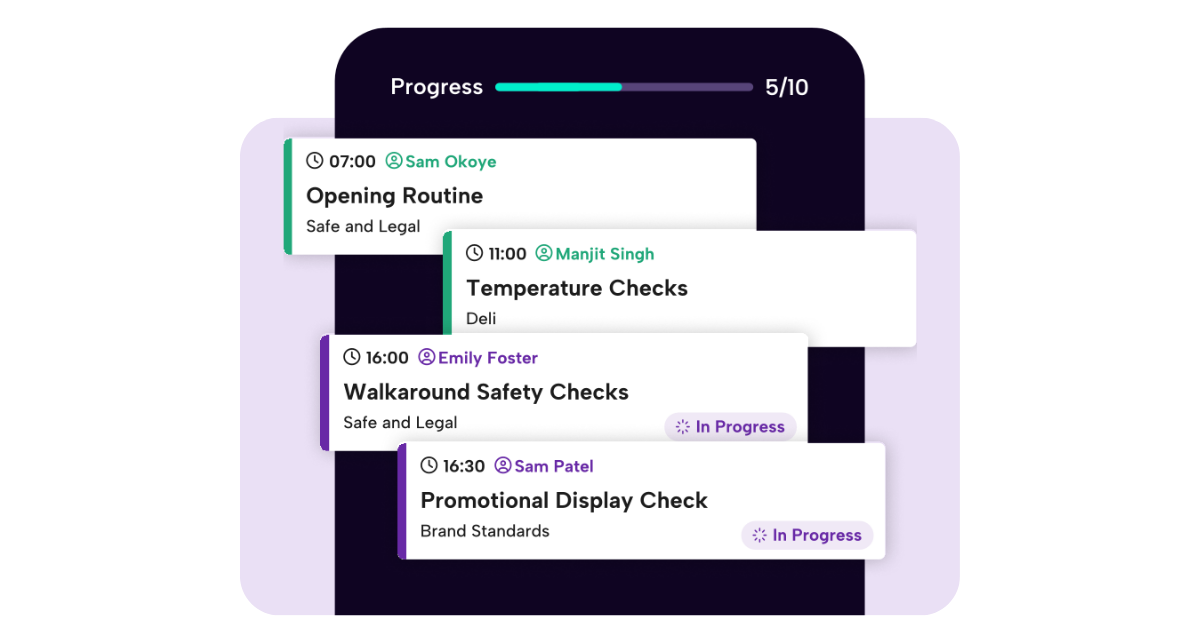
Our next-generation Task Management makes it easier to adapt operational work to on-the-ground conditions.
Tasks automatically adapt to opening hours, local holidays, planned events, exemptions and unexpected closures – without breaking oversight or reporting. Grace periods and one-off adjustments allow valid exceptions, while frontline teams see clear, prioritised task lists.
For managers, completion is tracked in real time, creating reliable, audit-ready visibility without constant manual editing of local inconsistencies.
Built to enable:
- Retail compliance across thousands of stores: Ensuring that regulatory and operational checks are completed consistently at scale
- Multi-site facilities management: Coordinating maintenance, safety inspections and routine operational tasks across large estates
- Food safety and hygiene across catering units: Maintaining high standards across kitchens, cafeterias and catering operations, adapting schedules for unexpected closures or events
Initiatives: one-off actions, delivered everywhere.
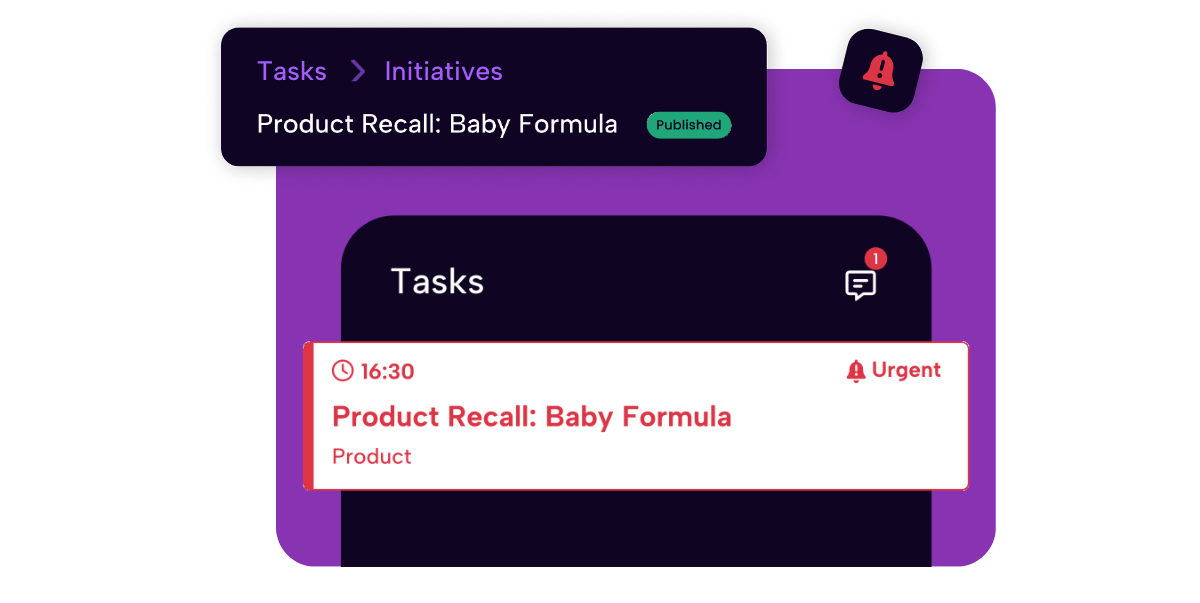
Not all work is planned work.
Product recalls, urgent updates, campaigns and briefings need to reach every site quickly and be completed without delay.
Initiatives allow you to broadcast one-off actions across all or selected sites in just a few clicks. Teams can acknowledge, complete and evidence tasks directly in mpro5, while managers track progress live.
Documents and guidance can be attached, reducing the need for separate tools or communications and cutting time spent chasing updates.
Initiatives are great for:
- Product recalls: Ensure all sites remove affected stock and provide evidence, with managers able to track progress in real time.
- Marketing campaigns and promotions: Roll out updates or brand initiatives at scale, ensuring standards are met and guidance is followed everywhere.
- Training and briefings: Deliver new procedures or mandatory updates, attach documentation and track acknowledgements across all relevant teams.
- Operational updates: Communicate urgent operational changes (e.g., compliance reminders or safety alerts) to all sites, ensuring immediate visibility and action.
What “Good” Looks Like: clearer standards, fewer mistakes
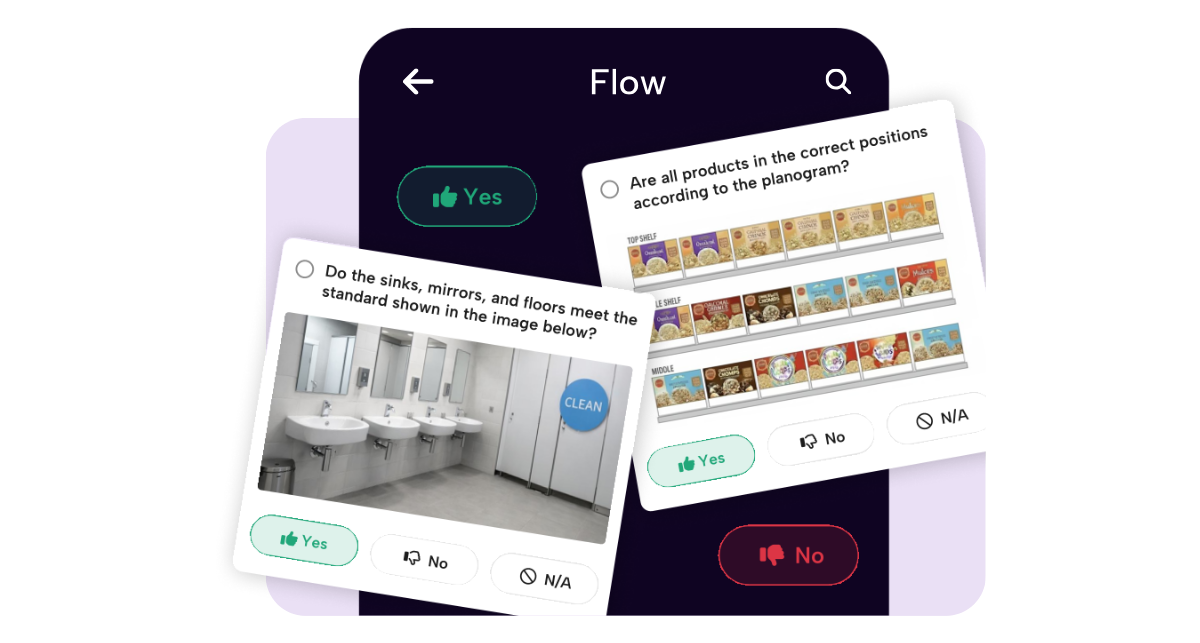
Written instructions don’t always tell the full story. What “good” looks like can vary from person to person and is often very different from site to site.
What Good Looks Like brings visual standards directly into workflows by attaching reference images to tasks and checks, helping you to show, not tell, across all your sites simultaneously. Teams can instantly see what “done right” looks like, reducing guesswork and errors.
It also speeds up onboarding and gives managers and auditors greater confidence in the quality of work being completed.
Show what good looks like for
- Retail planogram compliance: Staff check shelf layouts against reference images to ensure consistency and correct merchandising across all locations.
- Catering and hospitality hygiene checks: Teams verify cleanliness standards against visual guides to maintain food safety and regulatory compliance..
- Maintenance and facilities inspections: Staff follow visual standards for equipment checks or room setups, ensuring operational quality is uniform across sites.
Communication and collaboration, built into the work
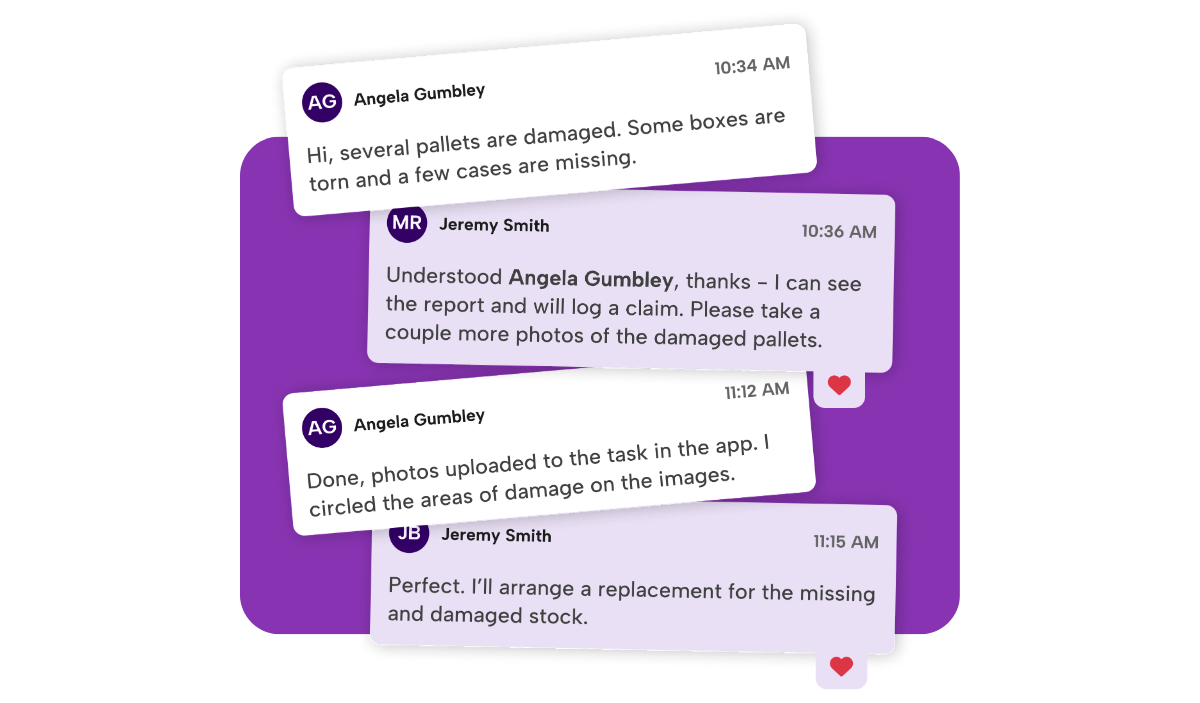
Operational conversations often happen in email threads, WhatsApp groups, or phone calls disconnected from the work they relate to.
Our new Communication and Collaboration module keeps those discussions inside mpro5. Teams can comment on tasks, ask questions, share files and clarify decisions directly where the work happens for faster issue resolution, clearer accountability and a single source of truth.
It’s an intuitive chat experience with mentions, reactions, file sharing and polls, while every discussion remains visible and traceable for review, training and audit purposes afterwards.
Together, these enhancements change the day-to-day experience for both frontline teams and managers.
Most importantly, compliance becomes something you can trust, not something you have to constantly check.
Instant communications for:
- Grocery retail issue resolution: Store teams comment directly on failed checks (e.g. temperature or availability issues), allowing managers to respond and resolve problems quickly without calls or emails.
- Catering and food safety compliance: Teams explain out-of-range temperature or hygiene results directly on the task, confirming corrective action to maintain food safety and audit-ready records.
- Maintenance and facilities coordination: Engineers and site contacts discuss access issues or scope changes directly on maintenance jobs, avoiding repeat visits and ensuring clear accountability across sites.
Getting started
These features are optional but strongly recommended. Many customers will see immediate benefits within existing workflows, with additional value unlocked through light configuration and guided rollout.
Our team provides hands-on support to ensure adoption is smooth and value is delivered quickly.
If you’d like to see the release in action or discuss how it fits your operation, we’d love to talk. For existing mpro5 customers, please contact your CSM directly to discuss the new features – or if you’d like to see how the new mpro5 could improve your operations, just complete the form below for a Demo.