

Equipment covered in meat build-up, condensation dripping from ceilings, overflowing drains clogged with pieces of raw meat and black mold were all part of the noncompliance nightmare leading up to a premium deli meats company’s listeria outbreak last July. The outbreak resulted in 10 deaths and 59 hospitalizations, according to the CDC’s report. While contamination of this magnitude is inherently disastrous for all parties, this situation worsened when FOIA requests to the U.S. Department of Agriculture (USDA) revealed the processing plant had received over 60 noncompliance citations in the year prior to the outbreak.
Drawing up images of Upton Sinclair’s The Jungle, this crisis emphasizes that noncompliance citations can have deadly consequences when left unaddressed. This makes regular inspections, adherence to hygiene protocols and comprehensive process management essential for every kind of food services facility. These processes are essential for leaders responsible for ensuring public safety.
An Overview of the Key Regulatory Agencies
On the federal level alone, there are more than 10 different agencies and more than 30 different laws regulating the food industry, each with its own requirements and specifications. Within this complex web of regulatory bodies, the two largest agencies are the Food and Drug Administration (FDA), which oversees food safety and labeling, and the USDA, which oversees meat, poultry and fish.
These agencies require facilities to perform and document a range of routine inspections to improve compliance. A common inspection for the food industry, utilizing technology professionals, can include antemortem and postmortem evaluations of livestock in order to rule out diseases. Additionally, the FDA mandates require thought leaders in the food industry to implement a Hazard Analysis Critical Control Point (HACCP) plan and maintain a safe ecosystem. This plan identifies potential hazards specific to the facility and outlines the steps necessary to prevent them. Facilities are required to consistently document their adherence to the plan.
Beyond the agencies themselves, food services must contend with various laws and frameworks. On top of all this, states have the authority to implement stricter regulations, including inspection protocols, more stringent labeling requirements, and further employee training.
The Challenges with Traditional Methods of Process Management
The complexity of this system of agencies and laws often results in inconsistencies in the application and understanding of regulations. These challenges make it difficult for facilities to meet all necessary guidelines. Additionally, the sheer volume of documentation and reporting necessary to prove compliance across agencies and bodies can overwhelm staff if done through traditional paper methods, leading to frequent oversights in documentation. Food industry workers require constant innovation in order to elevate the standard and streamline processes.
Human error is a critical component that exacerbates compliance challenges. Food processing facilities can be high-pressure environments, and that stress can cause employees to rush through tasks or even skip crucial steps, compromising compliance. In fact, research by Mental Health America ranks manufacturing and food and beverage as two of the worst industries for workplace mental health. The organization’s report shows that 58% of manufacturing employees, and 50% of food and beverage employees, report work stress “always or often” affects their personal relationships. Stress-related or not, an inadequate understanding of procedures can result in improper handling of food products.
Simply put, manual processes are prone to human error. Yet, seemingly small mistakes in recording temperatures or cleaning equipment can easily result in a noncompliance nightmare. This not only includes fines and reputational damage but could include a significant threat to public health.
How Food Safety and Facilities Management Software Can Help Food Professionals
Human error is inevitable in traditional process management, which is why many facilities have turned to digital food safety software options to streamline the process. This type of software can send automated alerts notifying staff and management when specific tasks need to be completed, such as when to clean equipment. This helps prevent potential compliance breaches by ensuring that essential safety checks are not overlooked. In fact, around 81% of American workers reported embracing the benefits of automated solutions, with 44% believing it will lead to a reduction in manual errors, according to a recent survey by KRC Research.
In addition to software specific to food safety, packaging and processing facilities can benefit from implementing an all-encompassing process management software. These programs can be integrated into every aspect of the facility and help maintain machinery by monitoring performance and immediately notifying employees when something has gone awry. This technology can also aid employees and allow for unified communications by functioning as a centralized platform and automating tasks. Lastly, such a program can further improve supply chain traceability, enabling facilities to quickly identify the source of potential incidents and notify any impacted community. This swift identification allows for faster responses, ultimately better safeguarding public health.
Benefits of Digital Process Management
Most notably, technology professionals utilize process management software that automates digital documentation, offering innovation capabilities that far exceed those of traditional paper methods. By addressing the challenges of manual documentation—such as fatigue, misfiled documents and lost information—digital systems enable facilities to effortlessly maintain comprehensive records ensuring a reliable network infrastructure. This shift enhances the accuracy of records by eliminating human error and reducing employee stress. According to a study by Dan Dumitriu, 74% of the companies surveyed reported a significant increase in employee satisfaction after implementing business process management software.
Additionally, the ease of access provided by digital databases also streamlines the process of generating reports and sharing information with regulators. Facility leadership can quickly retrieve and present the required documentation during inspections or audits, leading to faster response times and a more efficient compliance ecosystem.
In an age where it feels like the next health crisis is always lurking around the corner, having effective facilities management systems in place for food production and packaging is essential. Utilizing technology professionals, it’s imperative to always look to provide the newest and innovative ways to improve processes. In addition to reducing operational costs and the stress of proving compliance, it’s simply a necessity to safeguard public health.
Contact us today to book a demo or learn how mpro5 provides solutions to revolutionize operations and drive efficiencies to new heights.
In recent years, more and more allergy tragedies have been reported due to careless food businesses. One such tragedy involved 23-year-old James Atkinson, a university student with a severe peanut allergy, who died in 2020 after eating a pizza slice ordered through Deliveroo in Newcastle.
An investigation in January revealed that the restaurant had left allergen sections blank in its food safety documents. As these incidents become alarmingly frequent, people are questioning if UK restaurants will continue to follow Natasha’s Law in 2024 and beyond.
Natasha’s Law was created to protect those with food allergies, giving them confidence in their purchases and ensuring transparency in the food industry. It started in October 2021, requiring all restaurants and catering services to list every ingredient on product labels, highlighting the 14 major allergens. But as we look to the future, one question remains…
In the hospitality industry, where customer expectations have sky-rocketed, maximizing resources isn’t just about cutting costs; it’s about delivering an efficient and flawless experience. Be it a small boutique hotel or an extensive resort, smart resource utilization will drive better guest satisfaction and keep operations running seamlessly. It’s important to explore some of the key ways this can be achieved, with a focus on a careful balance between people, technology and the environment.
Workforce efficiency
One of the greatest assets in hospitality is, without question, the people. However, human resources can also be a major cost. The trick here, therefore, is not to cut down headcount, but to make sure each team member’s skills are utilized to their fullest. For example, shift management software allows employee schedules to align with peak demand times, reducing the risk of overstaffing or understaffing. When staff are placed where they’re most needed, better service is provided to guests, and employees are kept in higher spirits.
Investment through training also plays a crucial role. A well-trained team becomes far more capable of handling guests efficiently, avoiding time wastage caused by rectifying mistakes or making up for inexperience. Cross-training workers for multiple positions gives greater flexibility, especially during busier periods of the year.
Embracing automation
Automation is no longer a buzzword – it has become an absolute necessity for efficiency. Automation frees up the load on human resources, so the staff can focus on specialized tasks that might require more attention. Automated workflows can handle burdensome and repetitive tasks while keeping accuracy intact and saving time, therefore reducing the chances of human errors.
Automation doesn’t have to mean removing the personal touch to hospitality, but rather refining operational processes so that staff can focus on interactions with guests that really matter.
Putting data to good use
Another powerful tool for optimization is simply information. Data can be gathered from booking trends, guest preferences and occupancy rates that can later be analyzed to predict demand, manage resources and ultimately enhance profitability. For instance, analytics can reveal peaks and dips in reservations during each season, allowing hotels to promptly adjust staffing levels, marketing efforts, and even pricing, to match levels of anticipated demand.
Sustainability as a resource strategy
Going green isn’t just good for the environment; it’s an ideal strategy for managing resources. Reducing energy and water, for example, directly cuts costs. Smart energy systems, which automatically dim lights and lower heating or raise cooling when rooms are not occupied, can save hotels a fortune over time. And of course, water-saving devices like low-flow showerheads and faucets are practical solutions.
Waste management also falls into this category. The hospitality industry is notorious for generating a lot of waste, so reducing this can have the dual effect of enhancing both its sustainability credentials and efficiency. Switching to digital menus, as an example, reduces printing costs, while composting and recycling programs cut waste disposal costs.
Personalization to increase satisfaction
Understanding guest preferences can make a world of difference, both in terms of satisfaction and resource allocation. If certain types of guests often prefer certain amenities, then it’s simply a case of allocating resources accordingly, avoiding over-preparation or a stressful last-minute attempt to meet their requests. Personalization can even extend to room settings – temperature, lighting and music preferences – all create a welcoming environment while ensuring resources aren’t wasted on unnecessary extras.
Resource optimization in the hospitality industry is all about finding the right balance between operational efficiency and achieving successful guest satisfaction. With the right tools, training, and data, it’s entirely possible to reduce waste, keep staff motivated and guarantee a positive experience for every guest. So, while the aim might be to maximize resources, the real goal is to run an establishment seamlessly, where guests feel looked after and nothing goes to waste.
As businesses expand and operate across different locations, whether that be regionally or globally, maintaining a consistent brand image and ensuring compliance is more crucial than ever. This is made challenging when considering the unique set of requirements for each site, allocation of resources and overcoming operational challenges within teams.
With this in mind, site coordination and effective communication streams lie at the heart of multi-site compliance, responsible for managing resources, implementing standardizing processes, and streamlining procedures to ensure smooth functioning and optimal productivity.
Challenges faced in multi-site solutions
When managing multi-site facilities, management should always strive for consistency. Ensuring this, however, is far from an easy task when considering different operating procedures, teams, local regulations and site equipment, posing challenges to creating a cohesive brand experience.
Fostering a positive culture and upholding the highest levels of communication is essential. As many industries move online with remote working, the reduction in face-to-face activities has posed challenges for regional management. By facilitating open streams of communication and encouraging the use of online meeting platforms, team members are able to collaborate on overcoming challenges and curating solutions virtually, building rapport amongst employees, and essentially creating a united team regardless of physical location.
Compliance management with standard operating procedures
Compliance management is a crucial aspect of business operations, and more time and consideration should be applied to multi-site facilities, which are prone to lapses. Navigating complex regulatory and compliance challenges that may vary depending on local, state, and federal requirements, however, can be managed and enforced by implementing comprehensive standard operating procedures (SOPs) and quality management systems (QMS). When managing a company that spans different countries, understanding the differences in the regulatory compliance landscape is crucial. This involves conducting regular research and remaining up to date with any current or upcoming changes.
Once these regulations are understood and identified, implementing standardized procedures across sites that outline the necessary steps to remain compliant will ensure consistency in practices across all sites, regardless of location. Teams that may be susceptible to lapses in communication or in need of training refreshers can threaten a company’s compliance. Hence why staff training programs must be in place and regularly updated to ensure teams are aligned and understand the company’s expectations. This can be monitored by carrying out regulatory audits and performance reviews to identify any deviations from the SOPs for timely correction.
Digital facilities management solutions
Integrating facilities management software assists in streamlining the monitoring and tracking of compliance targets automating compliance activities, like maintenance scheduling, inventory management, and reporting using real-time data.
Computer maintenance management systems (CMMS), for instance, centralize maintenance operations, improving visibility for facilities managers when scheduling planned preventative maintenance and tracking work orders. The schedules for PPM are set within the system, which alerts businesses when equipment is due for servicing. This lowers the risk of unplanned downtime and ensures that all machinery is operating safely.
Digital compliance checklists are also useful tools that reflect relevant regulations, codes and standards specific to industry and location. These can be used in combination with IoT devices to monitor and control equipment performance, energy consumption, and security systems across all sites. By providing visibility, multi-site management can identify any areas that require improvement and act accordingly with efficiency.
Compliance is key
The regulatory landscape is undoubtedly challenging to navigate, especially for businesses operating across multiple sites and coordinating the various requirements to ensure smooth operation and brand expectations can become complex. By integrating digital facilities management platforms, managers can allocate resources and time more efficiently thanks to the automation of compliance target tracking and automated maintenance scheduling. When supplemented with thorough and frequent team training, businesses not only benefit from improved visibility but also assurance that compliance targets are being met across sites.
FMs play a pivotal role in the health and safety policies & procedures of a business. Discover how FM software helps secure the workplace for all occupants.
How FM Software is Transforming Health & Safety Management
Facilities management (FM) plays a critical role in ensuring safe and compliant environments. Whether in hospitals, offices, or supermarkets, the responsibilities of FM professionals encompass regular risk assessments, equipment maintenance, emergency preparedness, safety policies, and incident reporting.
In this blog, we will explore the transformative impact of FM software on health and safety practices.
The evolving landscape of health & safety in FM
The health and safety landscape in FM has transformed in the past ten years. Compliance has become more complex and customers expect businesses to use increasingly sophisticated digital tools to collect and act on data.
A recent Thomson Reuters report reveals that compliance leaders expect a significant increase in compliance burdens for facilities managers, due to evolving regulations and heightened scrutiny.
The pandemic also heightened the importance of health and safety compliance, turning it into a necessity for a return to normality. Facilities managers now face the challenge of delivering digital transformation in a complex regulatory environment.
The key to unlocking this problem lies in the right facilities management software. FM providers need digital tools that allow them to collect the right data on compliance, automate reporting, and facilitate action.
The rise of FM software in health & safety management
It is now almost expected of many facilities companies that they use at least a few digital tools, whether they have a CAFM (Computer Aided Facilities Management), a few disconnected apps, or a unified solution.
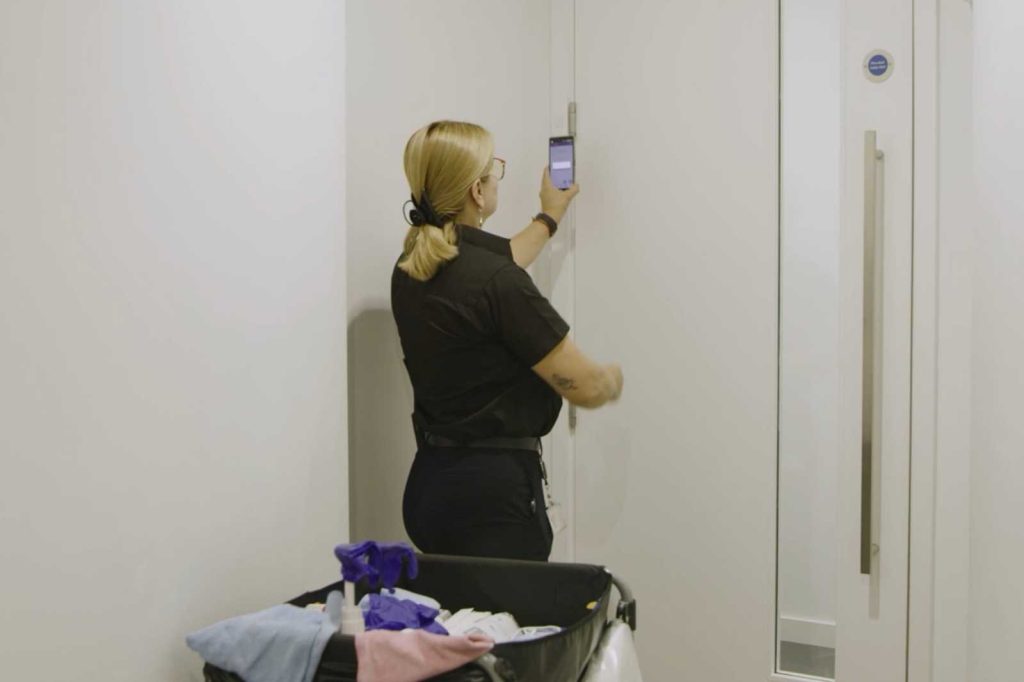
Global real estate company, JLL, said in a recent blog that, “What used to be a paper-based, long-drawn, costly and labor-intensive process can be made more accurate, simpler and more efficient with technology.” FM software like mpro5 provides a central platform for managing compliance. It simplifies data gathering by making the app, and IoT sensors, collect data as you work. This also makes it simple to conduct audits and risk assessments, and mpro5 will automatically generate the reports.
A PowerBI dashboard makes it easy to see what needs addressing, and remedial actions can be automatically generated off the back of failed checks.
Data-driven decision making and performance analysis
Managing compliance in the digital age is about employing the right tools to display data in a way that’s useful and can be understood by managers who aren’t necessarily experts in data analysis. This means using visualisation, automated reporting, and analysis that brings urgent issues into the foreground while providing an overall picture of compliance.
This allows managers to identify bottlenecks, risks, and long-term trends, empowering them to act on problems and improve processes.

Risk assessment and management
FM software assists facilities managers in assessing and prioritizing risks effectively. It helps implement control measures and monitor their effectiveness over time. This proactive approach minimizes safety risks and ensures compliance.
Staying compliant
FM software streamlines health and safety compliance processes. A mobile app, such as mpro5’s, enables employees to quickly evidence compliance with regulations as they work. This, in turn, ensures compliance is kept as a priority and saves employees valuable time on manual reporting.

mpro5 for simplified health and safety management
FM software is at the forefront of transforming health and safety management for facilities managers. With mpro5’s advanced capabilities, facilities managers can navigate the evolving landscape of regulations, monitor safety in real time, harness data for decision-making, and ensure compliance more efficiently.
mpro5 goes for total digital transformation in the long term, but we get there through gradual process change and smooth integration. Explore our blog to see how mpro5 can revolutionise your health and safety management today. Or, book a demo to discover more insights and leverage the power of FM software for a safer and more compliant workplace.
Book a demo, today!
While it may be true in certain scenarios, the stakes are much higher when it comes to the food industry. Hidden behaviors and data pose not only a danger to your brand and reputation, but also a serious threat to the health of your customers.

It only takes one incident to seriously harm a customer or damage your brand. And without visibility over your key processes, you have no way of knowing who or what was at fault, how to prevent it from happening again, and whether there are wider problems at play.
So, what can you do to eliminate these potentially damaging oversights?
Here are four areas of your daily operations that digitalization will shine a light on and why you can’t afford to ignore them any longer.
1. Digitize your food safety logbooks
Logbooks are the bedrock of any food service business. They:
- Prove that food safety and storage procedures are followed
- Provide a paper trail in the event of complaints or legal action
- Help, ultimately, to keep customers safe
They can also be the difference between commercial success and failure. If an environmental health officer (EHO) inspects your logs and decides they’re not up to scratch, they could give your business a customer-repellingly poor hygiene rating, put it in special measures – or even shut it down completely.
It’s vital, then, to keep your records organized and up to date. But here’s the problem. Most logs are still physical, paper things that have to be filled out by hand. This not only creates unwanted extra admin for busy staff, but it also makes records easy to falsify.
Another danger with paper logbooks is that they can be seen simply as a tool to keep the EHO happy. Busy employees might skip their paperwork in the moment and do it retrospectively, merely as a box-ticking exercise. And when this is the case, you can never truly know how compliant your business is.
A simpler, clearer process
With a process management app, you can digitize your logbooks to make the whole record-keeping process faster, simpler and more transparent.
Employees can log their food safety checks in just a couple of taps – with photographic evidence if needed – instead of having to write them all out by hand. And entries are timestamped and tied to a user, making them virtually impossible to falsify.
Data is gathered continuously, and you can access it 24/7. This allows you to spot trends, identify and fix failures quickly, and know your compliance status at all times – rather than discover major issues on the day of an audit itself.
Perhaps most crucially, everything lives in one central location in the cloud. So if you’re ever audited or investigated, all your logbook data is available in one click. This means no more trawling through offline records – not to mention a considerable reduction in your paper consumption.
2. Move your profit protection records to the cloud
Profit protection, quite simply, is about keeping your business profitable. It involves identifying and minimizing all potential sources of financial loss, from waste and shrinkage to theft, fraud and non-compliance.
 Much like food safety logs, profit protection records are often kept on paper and in spreadsheets. Because of this, the challenges around keeping up-to-date entries, preventing falsification, and creating reports are much the same.
Gathering and collating data from a mixture of analogue and digital sources is also a huge admin burden. Sources of loss must be identified and fixed as quickly as possible, to prevent them from escalating and becoming a serious risk to your business. But that’s not possible if you’re having to wait days or even weeks for the data you need.
A cloud tool can streamline the whole process. It allows you to store your profit protection data in one central hub, which in turn lets you zoom out, see the full picture and join the dots between incidents.
It also gives you the ability to set up automatic remedial actions – based on a set of rules you define – to quickly shut down problems as they arise. This means you can identify, fix and report on issues in a matter of hours rather than days or weeks.
3. Create digital checklists for compliance with Natasha’s Law
The introduction of Natasha’s Law in October 2021 means catering businesses now have an even greater responsibility to ensure their food labelling is clear, comprehensive and easy to understand.
 Failure to comply with the law is a criminal offence which could not only damage your business, but also have potentially tragic consequences. But with so many moving parts in the food preparation process, how can you know for sure that your business is compliant?
Digital checklists for your staff and suppliers are one simple but effective method. Have they prepared their medical diets today? Do they have evidence to prove it? Have they used the correct food labelling? These are just some of the steps such a checklist might include.
With mpro5, checklists are stored and managed in a single, central location in the cloud. Staff can work through them on a mobile app, instead of making unreliable paper records. And because they are timestamped, mandatory actions that require photographic evidence, there’s no room for cutting corners or falsifying information.
4. Set a new standard for brand standards
Giving your customers a consistent, predictable experience every time they use your services. That’s brand standards in a nutshell.
Brand standards cover everything that could influence someone’s perception of your business – from staff uniforms and in-store signage to portion sizes, product descriptions, and the correct positioning of products.
High brand standards help improve customer trust and loyalty. But if you let even the smallest details slip, you risk both financial and reputational loss to your business.
See the big picture
With so many checks and procedures involved – and so many people carrying them out – how can you be sure that brand standards are being properly upheld across your business?
If your processes rely on paper-based reporting, it’s difficult to gain a clear view of your brand standards at any given time.
This, again, is where a cloud tool like mpro5 can come into its own. It lets you create digital checklists for all aspects of your brand standards, making it quicker and easier for your staff to follow and log their procedures.
All brand standards data can be stored in a single, central location. This allows you to pinpoint areas for improvement and tighten up processes. And it creates a clear, digital paper trail – with photographic evidence – should you ever face a compliance dispute with an external brand or supplier.
Start small. Plan big.
Digitizing your key processes and compliance procedures may seem like a daunting and expensive prospect, particularly if you have a large business. With process management software, however, you can tackle it all piece by piece:
Start with a single process – ideally one where a digital workflow could have the most impact
Monitor its performance over a few months
Roll it out to other processes and areas of the business, as and when you have the resources
Over time, by centralizing all your key data, you’ll start to understand exactly how efficient and compliant your business is. You’ll be able to identify trends and recurring problems, react to them immediately, and make decisions based on solid data – not gut feel or anecdotes.
Above all, it will save your employees an enormous amount of time. And in the catering industry, time really is money.