

Recall Lessons from a 1.5 Million-Pound Temperature Control Failure

On 17 October, Food Safety News reported that a US processor had issued a recall for more than 1.5 million pounds of ready-to-eat meat and poultry products, including bacon, hot dogs, sausages, turkey breast and ham sold through retail and foodservice channels nationwide.
The reason given was temperature. Products stored in a warehouse cooler may have been exposed to temperature deviations. Yet two key details stood out:
- The products in scope were manufactured between 31 March and 7 October, a period of more than six months.
- A retail customer first flagged the issue after receiving a warm product on 1 October.
No illnesses were reported, and the company moved quickly once it identified the issue. The concern is the six months before that. If a temperature issue affected products for more than six months, why did nobody spot it sooner?
The temperature failures that lead to recalls
Most temperature-control failures start quietly.
A door seal begins to deteriorate. A refrigeration unit runs a few degrees warm overnight. A defrost cycle takes longer than expected.
By the morning, everything appears normal.
The 8am reading is within tolerance, so nobody has reason to question what happened at 3am.
That is the limitation of periodic checks. They show what happened when someone looked, not what happened in between.
A quality manager at a UK bakery operating around the clock described the challenge perfectly:
“Our temperature checks happen every four hours on paper, and if one was missed or filled in afterwards, there’s no way to identify it. We’ve got cameras, but if there’s detailed investigation then only we can know.”
The only way to prove that a 2am check happened at 2am is to review CCTV footage.
Every auditor understands the problem. The record says one thing, but there is very little independent evidence to support it.
Don’t let human error trigger a recall
A technical manager at a produce packer recently asked us a question we hear regularly:
“Can those parameters be put in so we’re not ticking pass or fail?”
He had identified a common weakness in both paper systems and basic digital forms.
A refrigerator can be reading 10°C against a 4°C limit and still be marked as “Pass”. Not through negligence, but through human error. People are busy, tired and often carrying out dozens of checks during a shift.
When an operator decides whether a result passes or fails, the record reflects what someone believed happened.
Critical controls work best when the process removes that judgement.
The operator records the reading.
The system decides whether it passes or fails.
mpro5 helps food manufacturers identify issues earlier, respond faster and maintain the evidence needed to defend their decisions. The approach is built around five stages: Check. Fix. Prove. Prevent. Empower.
Check
Readings are captured when they should be, whether someone remembers or not. Connected sensors can provide continuous monitoring between scheduled inspections, while predefined limits automatically identify exceptions.
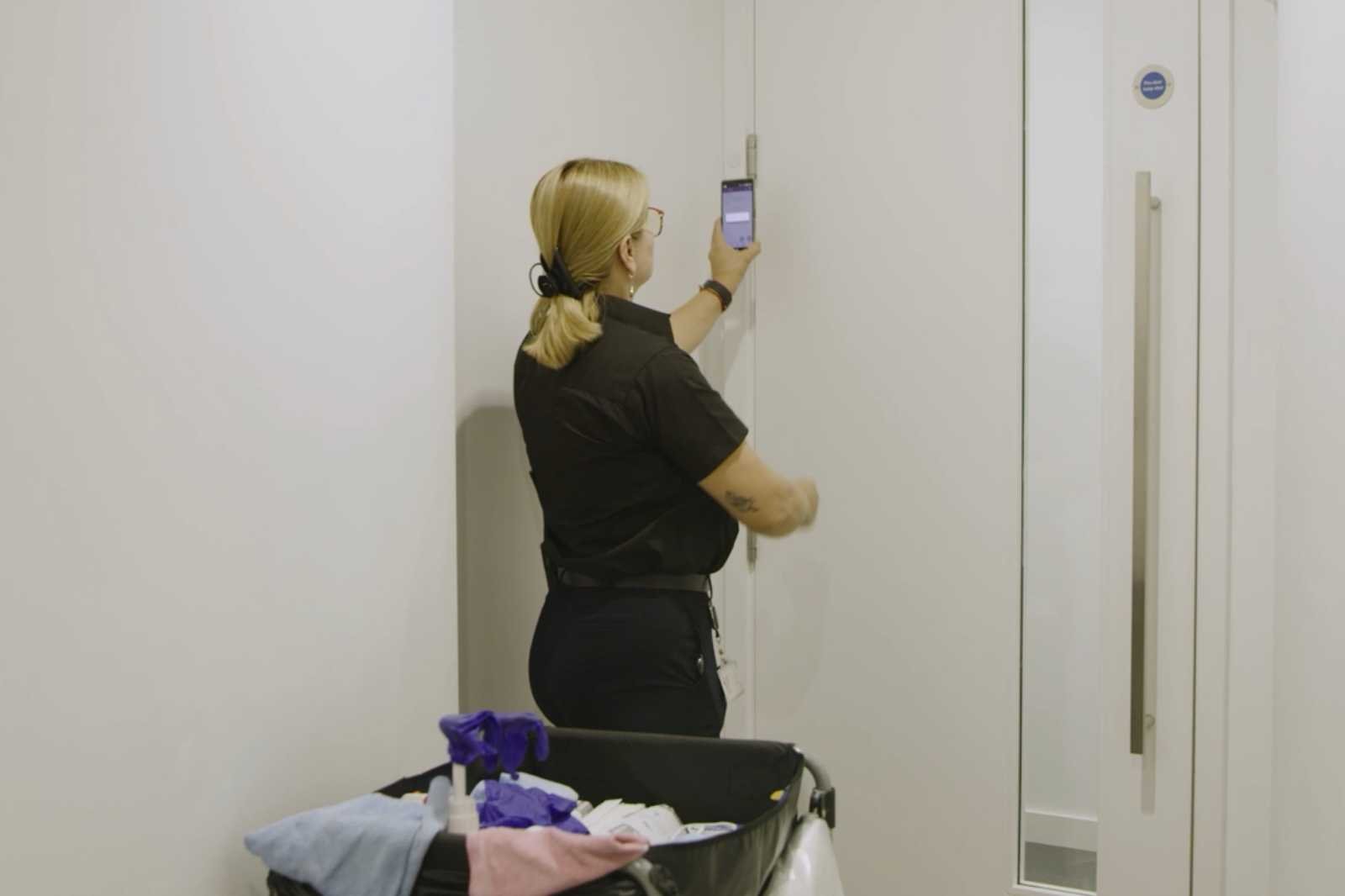
Fix
A failed reading should not sit unnoticed on a form.
The moment a limit is breached, a corrective action is raised, assigned to an owner and given a deadline. Whether the action is moving stock, calling engineering or holding product, there is accountability and visibility until the issue is resolved.
Prove
Every reading, action and escalation is timestamped, linked to an individual and tied to a location.
When an auditor, retailer or regulator asks for evidence, it should be available in seconds rather than buried in folders and filing cabinets.
Prevent
One failed reading is an incident.
Several nights of elevated temperatures are a trend.
Spotting that trend early allows teams to intervene before the issue develops into a customer complaint, a product hold or a recall.
Empower
People make better decisions when they understand the limits they are working to and why they matter.
That is particularly important for seasonal, temporary and agency staff who may be unfamiliar with site-specific procedures.
Ingredients fail quietly too
Temperature is not the only risk that develops unnoticed.
On 9 October, the Food Standards Agency published a recall after Salmonella was detected in pistachio nuts used as an ingredient in five ready-to-eat products manufactured by Greencore for two major UK retailers.
In situations like this, supplier controls, intake checks, batch coding and traceability processes determine how quickly the business can respond and how widely the recall needs to extend.
The ability to trace an ingredient one step back and one step forward often makes the difference between a contained incident and a much larger commercial problem.
Three questions worth asking this week
- If one of your chillers started running warm overnight, how long would it take somebody to notice?
- If a retailer requested six months of temperature records tomorrow, how long would it take to produce them?
- When did you last test your recall procedure from end to end rather than assume it works?
If your answers are “weeks”, “a day of digging” and “we haven’t tested it recently”, you’re not alone.
Those are the answers we hear most often.
Most businesses do not discover weaknesses in their controls during routine operations. They discover them when a retailer asks difficult questions, an auditor requests evidence or an incident triggers an investigation.
See where your exposure sits
For more than 30 years, mpro5 has helped food manufacturers, retailers and hospitality businesses replace paper-based compliance processes with real-time visibility, automated controls and auditable records.
More than 1.6 billion compliance questions have been answered through the platform, giving organisations greater confidence in the controls they rely on every day.
Our Free Food Safety Exposure Analysis highlights where processes depend on assumptions rather than evidence and identifies opportunities to strengthen control, traceability and compliance.
The assessment can be mapped against the standards that matter to your business, including:
- BRCGS
- SQF
- Retailer-specific technical standards
- FDA requirements
Understanding where gaps exist is far easier, and far less costly, than finding them during an audit, a customer investigation or a recall.
Book your Free Food Safety Exposure Analysis and see where your business may be exposed.