

Natasha’s Law: How to stay compliant in 2026
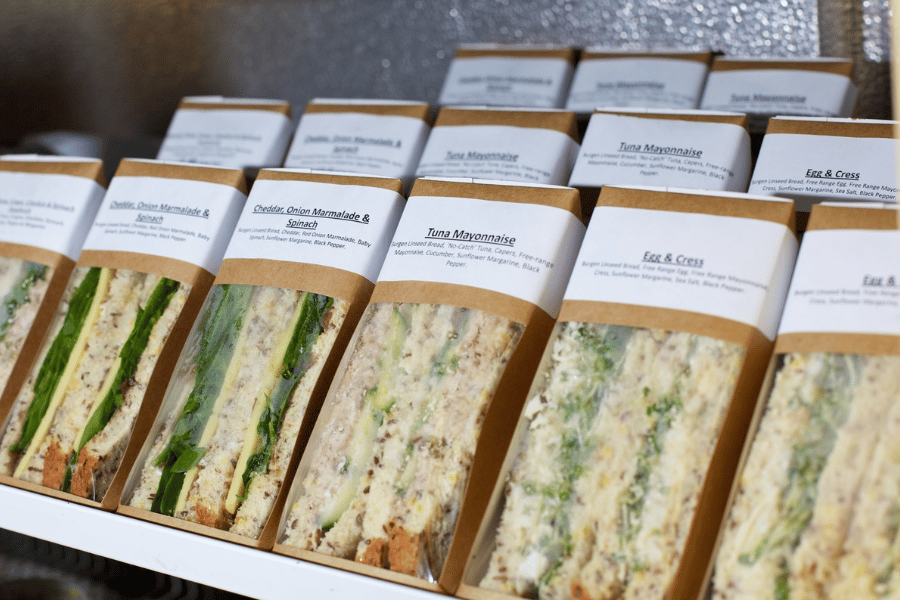
In October 2021, the UK food industry changed permanently.
Natasha’s Law, the Food Information Amendment requiring full ingredient and allergen labelling on all food prepackaged for direct sale, came into force, and businesses that weren’t ready faced some uncomfortable choices very quickly.
Five years on, you might assume compliance is no longer much of a conversation, but allergy-related incidents and recalls continue to make headlines.
People continue to be seriously harmed, and in some cases killed, because allergen information was missing or processes were simply not followed.
So whether you’re refreshing your understanding of what Natasha’s Law actually requires, or you’re reviewing whether your current processes are genuinely fit for purpose, this is worth a read.
The story behind the law
Natasha Ednan-Laperouse was 15 years old when she died in 2016 after eating a pre-packed baguette from Pret a Manger at Heathrow Airport. She had a severe sesame allergy and carefully checked the label, as well as double-checking with staff that sesame wasn’t present. The sesame that killed her was baked into the bread, but it wasn’t listed on the label because it didn’t need to be.
The inquest into her death exposed a significant loophole in UK food labelling law: businesses making and selling fresh products prepacked on their own premises were not required to provide allergen information on the packaging itself. Verbal communication, like asking staff and checking boards, was considered sufficient.
Natasha’s parents, Nadim and Tanya, campaigned tirelessly for change. The result was the Food Information Amendment – Natasha’s Law, which closed that loophole and introduced mandatory full ingredient and allergen labelling for all pre-packaged for direct sale (PPDS) food.
Tragically, Natasha’s case was not the last of its kind. In 2020, James Atkinson, a 23-year-old student with a severe peanut allergy, died after ordering a pizza through Deliveroo in Newcastle. A subsequent investigation found that the restaurant had left the allergen sections in its food safety documents completely blank.
What Natasha’s Law actually requires
The law applies specifically to food that is pre-packed for direct sale (PPDS), or food that is packaged on the same premises where it is sold or offered to customers. That includes:
- Pre-prepared sandwiches, baguettes, wraps and salads
- Pre-wrapped items kept behind a counter
- Pasta pots, sushi, pastries and similar grab-and-go products
- Some food sold from mobile or temporary outlets
It doesn’t cover food that is packaged elsewhere and delivered to the site (that falls under pre-packed food rules), or food prepared and served directly to the customer without pre-packaging.
For PPDS food, the label must include:
- The name of the food
- A full ingredients list, ordered by weight (greatest first)
- All 14 major allergens clearly emphasised in bold, italics, capitals, or a contrasting colour
The 14 major allergens covered are: celery, cereals containing gluten, crustaceans, eggs, fish, lupin, milk, molluscs, mustard, tree nuts, peanuts, sesame, soya, and sulphur dioxide/sulphites.
Who it affects
Natasha’s Law has broad reach and the businesses it affects aren’t only the obvious ones. Yes, sandwich shops and cafes are squarely in scope. But so are:
- School and hospital catering operations
- Contract catering companies
- Supermarket counters and in-store bakeries
- Hotel and leisure catering
- Food service operations within larger facilities management contracts
If your operation produces any PPDS food, even as part of a broader service, you’re in scope. If your operation runs across several sites the compliance burden multiplies fast.
When recipes or suppliers change, so should your label
Most food businesses understood what Natasha’s Law required when it came in. The part that a lot of businesses have struggled with since then is keeping up with change.
When recipes change, or you switch suppliers (or they switch ingredients) everything needs to be reviewed. Similarly, seasonal menus or rotation can also throw a spanner in the works. Any one of those moments is a potential compliance risk and, in most operations, the systems designed to catch them are still fundamentally manual.
It’s rare that teams are deliberately negligent or cutting corners, but through the ordinary friction of busy kitchens and high staff turnover, consistency can be the first thing to slip. The restaurant in the James Atkinson case didn’t leave allergen sections blank out of malice, but because the process broke down.
For larger or multi-site operations, the stakes are higher and the margin for error is thinner.
How to comply with Natasha’s Law: a practical checklist for food businesses
There are a few foundational areas that every food business should have locked down and should be actively maintaining:
Supplier relationships and ingredient visibility
You can only label accurately if you know exactly what’s in your ingredients.
Active, ongoing communication with suppliers is central to this. When a supplier reformulates a product (which happens more often than most businesses realise), you need a process in place that means you know about it immediately.
The risk and compliance burden here is on the business selling the pre-packaged food and not the ingredient supplier, so make sure you’ve got a process in place as the supplier isn’t obliged to offer one up.
Label production that scales
Handwritten labels are not a scalable solution.
You need to be able to produce accurate, consistent labels across every PPDS item.
The answer depends on the scale of your operation but it almost certainly involves a combination of specialist labelling software and a digital management layer that keeps ingredient data current and consistent.
Staff training that actually sticks
Every person who touches the food preparation and labelling process needs to understand what they’re responsible for and what happens when something changes.
In high-turnover environments, that training can’t be a one-off induction. It needs to be embedded in day-to-day workflows, with clear escalation paths when a new ingredient or recipe is introduced.
Audit trails that prove compliance
If something goes wrong, ‘we trained our staff’ and ‘we update our labels regularly’ aren’t enough without evidence.
Businesses need digital records that show who confirmed what, particularly when recipes change or new items are added to the menu. In a serious incident, an auditable compliance trail will be crucial to find out what went wrong and protect your business.
Where technology fits in
Specialist food management and labelling software is the most effective way to keep allergen and ingredient data accurate at scale.
Many solutions will automatically propagate changes across your systems when a recipe or ingredient is updated, removing the risk of a label being printed from outdated information.
Beyond labelling, digital workflow and compliance platforms can help food businesses make sure policies are implemented consistently. Digital checklists and logbooks help you to confirm staff have read and understood a recipe change. Automated alerts that trigger when a process step is missed help you to move fast and contain potential problems before they spread.
mpro5 works with food businesses and contract caterers to build exactly these kinds of compliance workflows. turning what can feel like a huge administrative burden into an operationally embedded process that protects both customers and the business.
The bottom line
Natasha’s Law has been in force since October 2021. The legislation is not new but the compliance challenge is ongoing, and for multi-site food operations, it’s one of the more operationally complex things you’ll manage.
The businesses that get this right are the ones with the best processes, who understand that the stakes of getting it wrong are about as high as they get.
If you’d like to understand how mpro5 can help your food operation maintain Natasha’s Law compliance at scale, book a demo and we’ll show you how it works in practice.